
It was the week before South Padre Island would be covered with college and high school students on spring break.
Three Corpus Christi men decided it was time to go to the camp house and fish before the crowd of hormonal teens hit. On Monday, April 12, 1965, the trio left Corpus Christi by boat and motored south toward Baffin Bay.
The fishermen were John David Fox, a 38-year-old mechanic; Van Dave Carson, a 41-year-old service station operator and retired Navy man; and Noel Douglas Little, a 51-year-old auto mechanic who also performed as a circus clown on the side. (Sadly, I can find no photos of them.)
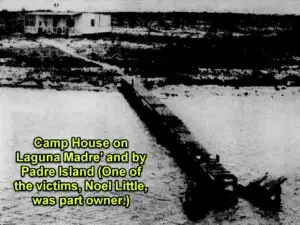 Noel Little was part owner of a small camp house, hardly more than a shed with no utilities … a place to shelter fishermen from the weather. It was perched on a little island right in the Laguna Madre. That’s where the fishermen were headed.
When they arrived, it was almost dark. The men docked their boat and stepped onto a small pier attached to the island. They put out their lines to see if they could catch a bite for supper. By then, it was probably around 8 p.m., and they heard a small boat. A few minutes later, they saw it creeping toward the pier.
The men made no objections so the boys tied their boat to the pier close to the shore of the little island and climbed out. As they did, the fishermen would have seen the talkative boy sling a rifle over his shoulder. If there had been more light, they may have noticed the other boy—a kid with blond hair, and he needed a haircut. It was too long—like those Beatles’ and their shaggy hair. He also had, of all things, a goatee, and his clothes looked like something a foreigner would wear.
The boy with the rifle pointed to a pile of wood and asked if they could take some. Noel Little, part owner of the camp house, said it was fine if they took a few sticks.
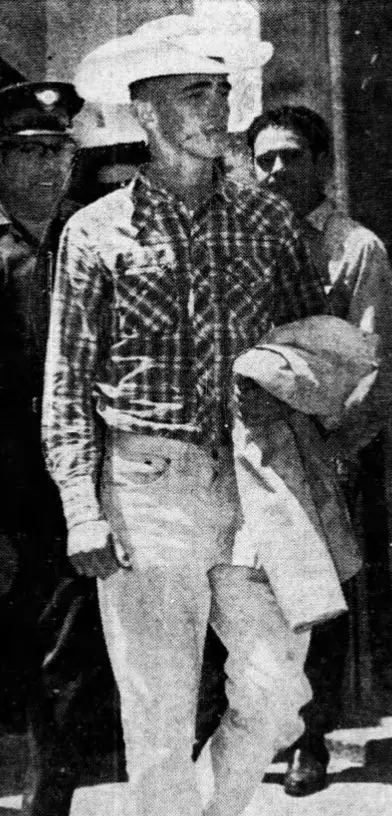
Krueger in Mexico on date he was to be returned 4/23/1965 | Apr 23, 1965, page 1 – El Paso Herald-Post at Newspapers.com™
Later, John Phillip Angles, the boy that newspapers would call a “goateed boy” would tell police he had wandered off a short distance also looking for firewood because the other kid had told him to. But it was just a pretense to get Angles away from the pier. There were no trees or firewood on that little place—only a little driftwood here and there. The goateed boy said his talkative friend walked over to the woodpile, raised the rifle, and began shooting at the men. He said the men were backlit by lanterns at the end of the pier.
The shooter didn’t miss—Paul Eric Krueger was a military student. He knew how to handle weapons—and he was a good shot. In a matter of seconds, he had killed all three men with an AR-15. Then he walked down the pier, stood over their bodies, pulled out another weapon—a carbine—and shot them several more times.
Krueger fired 40 rounds during the assault. One rifle was so powerful and destructive that it blew open five-inch holes everywhere a round hit flesh.
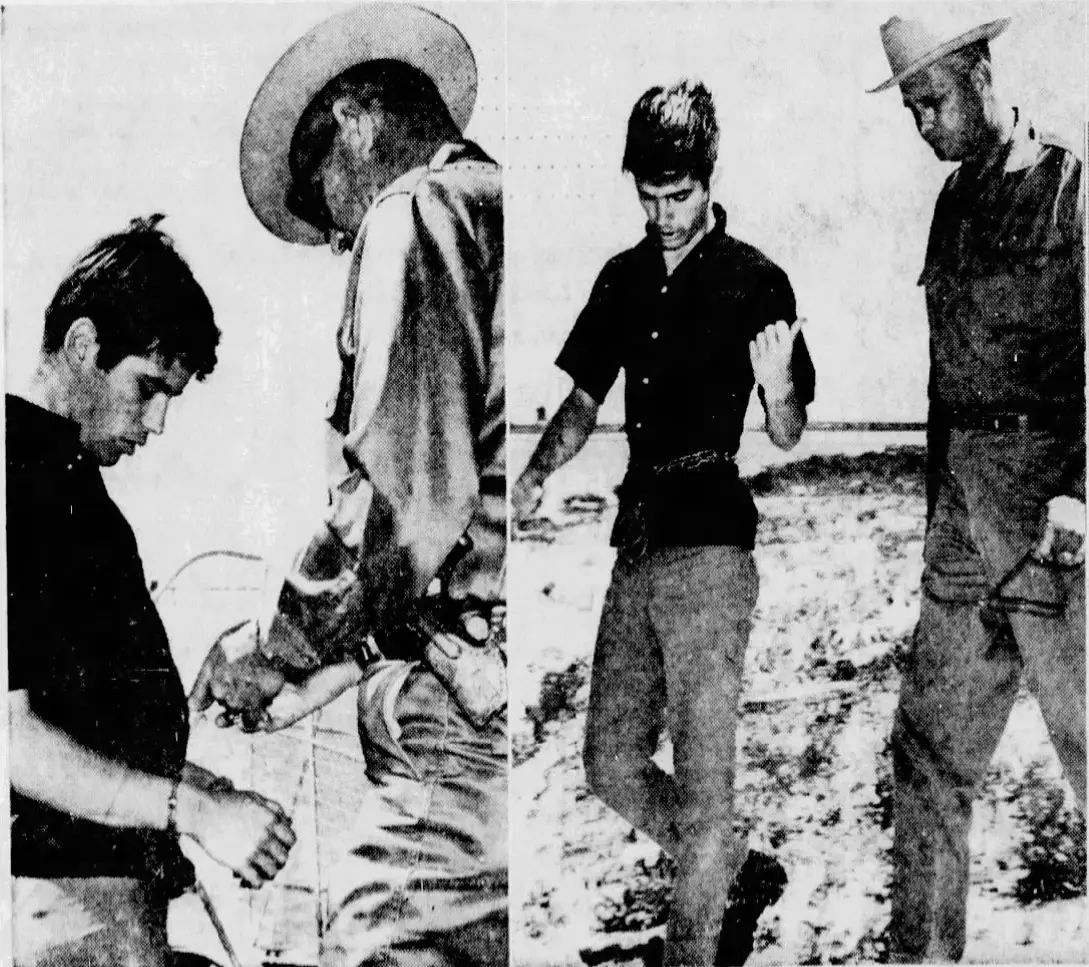
Authorities and John Angles – Credits https://www.newspapers.com/image/756367604/
Angles later told police that while they were still in the boat approaching the pier, Krueger had said, “I’m going to kill them.” Angles thought he was joking—until he saw Krueger’s face. After that, with Krueger carrying the rifle, he was too afraid to say a word.
Hi, y’all. It’s Brenda at Vintage Texas Crimes.
A quick note —- I didn’t mean to disappear, but I’ve been working hard—daily—to finish my book, Unlikely Victims, about two young women at the University of Texas killed by a fellow student whose name was James Cross. It was another senseless killing. Anyway—that’s where I’ve been … being a hermit and focused!
This week, while digging through 1965 newspapers to verify a few facts on that story, I kept running into stories about Paul Eric Krueger—his crime and trial. The Krueger story happened two months before the killings by James Cross. So, I decided to make this my last story of 2025 for Vintage Texas Crimes.
This story about Paul Krueger has a twist toward the end. You WILL have an opinion about the ending. At the very least, it’ll give you something to think about. Okay … back to it!
+++++++++
Three Days Before the Killings — San Clemente, California
Three days before the murders, Krueger (17) and Angles (16) were 1,500 miles away in San Clemente, California, doing what teenagers do: riding around on a spring evening.
That night, they were cruising in a 1963 Thunderbird convertible that belonged to Krueger’s mother.
The fun ended when a police officer pulled them over and cited Krueger for speeding. It was a Friday evening. Krueger and Angles were on spring break. Angles would later say when Krueger got the ticket, it was like a switch flipped.
After the officer left, Kruger said he wasn’t going back to school. He was going to Venezuela. There was political unrest there, and Krueger imagined—fantasized—that he could become someone important. A political leader who would gain power by being a soldier of fortune.
The blond and light-skinned Angles went along with it. It sounded exciting. They’d drive to Texas, and take a boat south to Venezuela. Angles liked the idea, perhaps because he knew the language. He spoke fluent Spanish and had dual citizenship with Venezuela and the U.S.—his mother was Venezuelan and his father was a U.S. citizen and employee of Gulf Oil Company.
Krueger, who attended Army and Navy Academy in Carlsbad, California, sounded confident, like he knew exactly what he was doing.
He was on spring break, and Angles, who lived in Hollywood, was visiting him for a few days. It was the perfect opportunity.
They returned to Krueger’s home on Avenida Vaquero in San Clemente, so he could pack. The house was located in an upscale neighborhood a few blocks from the beach. The boys gathered guns that were Krueger’s, money, and clothes. And just like that, they were off.
It is unknown which weapons came from Krueger’s personal collection of guns and which were purchased on the way to becoming soldiers of fortune. Here is an inventory of their arsenal by the time they reached Texas:
Six rifles (including an M-1 Garand, M-1 carbine, AR-15, lever-action, .30-30, 30-06, and a .457 magnum rifle)
A shotgun, its gauge wasn’t mentioned
Two pistols (.380 Llama and .25-caliber automatic)
Approximately 1,000 rounds of ammunition
A hand-grenade kit
A saber, machete, and bayonet
And a tear gas gun disguised as a pen
There may have been two more rifles that were thrown into the water
Krueger’s parents had money. His family owned a nice home in San Clemente. He had cash, military schooling, and a valuable arsenal.
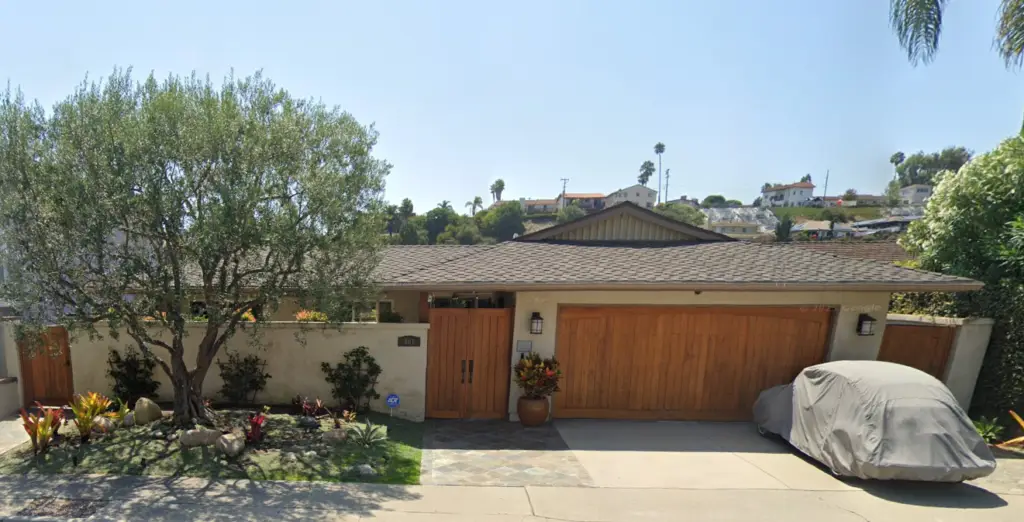
The Kruegers Home in San Clemente, California where Paul Krueger grew up.
The Kruegers were known in San Clemente. They were part of the country club set. Dr. Richard Krueger’s work was running his business called Aerojet Engineering and Manufacturing, Inc. (sometimes spelled Airjet in old records).He was also a member of the Orange County planning and zoning committee which has its own flavor of power.
The point is trouble doesn’t just look for people down on their luck. And, I want to know the answer to this: “Why did that 17-year-old have that much weaponry or the ability to purchase more in the first place?”
Texas, the Pier, and the Murders
The evening of April 9, 1965, Dr. and Mrs. Krueger were out to dinner with friends. The boys loaded the Thunderbird and pointed it toward Texas; they would drive there and take a boat to Venezuela. During the trip, Krueger was on a winning streak if the prize was speeding tickets, because he received two more citations for speeding on the way to Texas. Before April 9, he had never received a ticket for anything!
The boys rented a hotel room when they reached San Antonio, and they slept. The next morning was April 12, and they were off again on their adventure. Between San Antonio and Corpus Christi, they “played chase” back and forth with the Thunderbird and a couple of girls about their age who were driving a gray truck.
Krueger and Angles rented a 14-foot boat and outboard motor from Graham’s Bait Camp in Corpus Christi. Someone there showed them how to operate it. They loaded the little boat with food, weapons, and ammunition, and they set off toward Venezuela, possibly with a stop planned for Mexico. Buzzing into the gulf in the little boat was a dangerous plan. Even a 17-year-old should have known that boat wasn’t seaworthy for going to Mexico, much less Venezuela. And what do you want to bet that neither of them had a life jacket with them? Nothing like that was mentioned in any source I consulted.
Paul Krueger was raised near the Pacific Ocean in San Clemente, so maybe that gave him the confidence to tackle the trip across water. Still, he apparently had little experience to help him in the Gulf of Mexico, and clearly, the boy was short on common sense. The pair were heading into the wind in the gulf and were barely moving. They soon got lost in the coastal waters. Daylight was gone and fog was rolling in. Krueger realized he didn’t know what he was doing or where he was—but instead of admitting it, he complained the boat was too slow. He wanted a bigger one, and he was angry.
Then he saw the light of lanterns, so they navigated toward it … the lanterns were on a pier and gradually, they saw what was tied to the pier—a much bigger boat.
 At the other end of the pier was a small island … but really, it was a spoil bank, a mass of mud, sand, and construction waste dumped in the water until it arose because of all the debris piled there. It was an island that could be destroyed by a hurricane at some point in the future, but until then, it was the foundation for a fishing camp.
The spoil bank island lay between the mainland and the long, skinny Padre Island … it was in the big lagoon known as “Laguna Madre,” and you could not get there with a land vehicle, only by boat.
Some accounts say Krueger planned to hijack the fishermen’s larger boat. Others say they were simply lost and wanted directions back to Corpus Christi. Either way, they headed for the pier. But this is how and where the killings took place.
Angles’ story to authorities was that Krueger started moving supplies and weapons from the little boat to the fishermen’s larger one when Krueger suddenly realized what had just happened … what he had caused to happen. Fear had gripped him and he stopped, saying, “No! We’ve got to get out of here.”
Angles’ teeth were chattering; he was in shock and terrified, he had been afraid from the minute he knew his friend considered killing the men. Krueger threw the murder weapons into the water.
They got back into the small boat and managed to find Corpus Christi in the dark from the directions they had received. They abandoned the boat on shore and found the Thunderbird. By then, it was around 1 a.m. They drove to San Antonio, arriving around 4 a.m.
In San Antonio, they rented a motel room under fake names. Their plan was to split up and ditch the car, making it look as if they had disappeared. Krueger wanted to get into Mexico and thought they would be better off alone and on foot, presumably because of having rented the boat that they had not turned in, which could have also identified them in some way as a pair of teens heading toward the site where the dead bodies would be found floating.
On April 13, after a few hours’ sleep, Angles woke up in the motel, and Krueger was already gone.
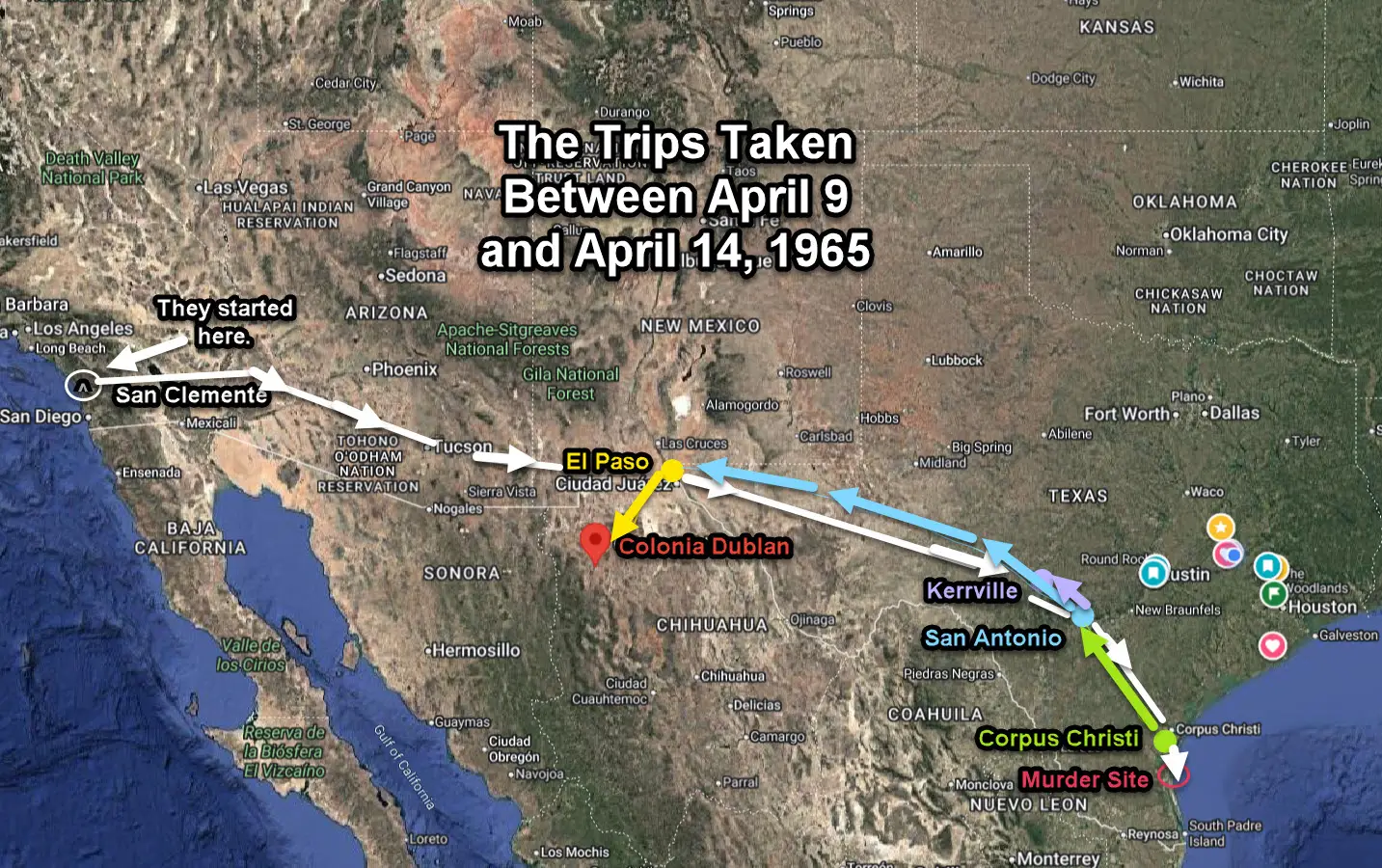
The Trips Taken Between April 9 and April 14, 1965
Arrests, Flight, and Capture
Angles took a bus to Kerrville. When he stepped off, his appearance immediately drew attention—long hair, facial hair, a pair of tight black pants, not like anything boys wore in Kerrville, Texas in 1965. They were slim-fitting and had flairs at the bottom around the ankles. The Kerrville police seemed to be unusually concerned by the goatee and the way the young man was dressed. And those boots had them scratching their heads. They were black leather and came to just above the ankle. The boots had heels, nearly two inches tall, and a seam running down the front middle of the boot … finally, one officer told reporters they were “flamenco boots.”
The California, Beatnik-ish, counter-culture look and clothes got John Angles arrested in Kerrville, Texas. Within minutes, the officer realized Angles saying more gibberish than sensible words—and he discovered the boy was carrying a .38 pistol. He took Angles into custody.
Angles blurted out the entire story. At first, police didn’t believe any of it. But Kerrville authorities contacted Corpus Christi police, who alerted the Navy. A helicopter was dispatched and soon spotted three bodies floating near the pier.
Angles’ story checked out. Or at least that much of it did. Once the bodies were found, authorities began to suspect Angles had killed the men and Paul Krueger. They didn’t buy the story that Krueger had abandoned Angles in San Antonio.
Meanwhile, Krueger was on the move. He slipped into Mexico—crossing the International Bridge at El Paso like any tourist, then hiking around a customs checkpoint. He hitchhiked deep into Chihuahua and hid at a ranch near Colonia Dublán.
Mexican police, acting on an FBI tip, arrested him. He was found with a loaded .38 pistol and tear gas. On April 23, 1965, he was deported and handed over to U.S. authorities.
“I feel fine,” he told reporters. “And I’m glad to be back.”
The Letter
Edna and her husband put out pleas on televised programs begging Paul Krueger to give himself up. They may have even paid for airtime. Krueger knew his parents were reaching out.
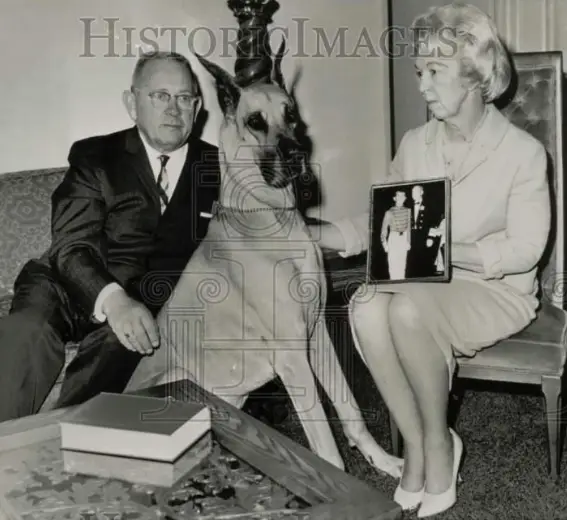
This is Dr. Richard Krueger, their dog, Baron, and Mrs. Edna Kruger. It’s also one of the photos that was used to encourage Paul Krueger to come home. You can purchase this image from Historic Images on eBay. Link is in the description.
While he was on the run, Krueger wrote an unmailed letter to his mother, Edna Krueger, later recovered by authorities. It offers a rare glimpse into his state of mind in the days following the murders.
Dear Mom, I love you very much. Please believe at least this much about me. The whole of last week was one awful nightmare. I couldn’t have been in control of all my senses to do what I have done—this I’m sure is obvious. God knows I’m sorry, for I have suffered greatly. But worst of all, I’ve hurt you very deeply.
I am going to try and work here with the people who live here. They don’t know about me, but believe I just ran away from home. Ask Sister Emily and Father Martin to pray for me. For I know not how long life will be worth living. May God bless you. Love you always.
My name down here is Bud Luer.
With both youths now in custody, the long and complicated legal process began.
Justice—Two Very Different Outcomes

Paul Krueger in Court in Brenham, Texas https://www.ebay.com/itm/387829084116
Paul Krueger was six months older than his friend, and he was treated as an adult because he was 17 years old.
John Phillip Angles was treated as a juvenile; he would have turned 17 on July 4, 1965. From 1966 to 1969, Angles was confined to a juvenile facility in Gatesville. When he turned 20, a judge in Kleberg County ruled that Angles had done everything the juvenile system could offer him. He had taken every available course and needed college-level education, which wasn’t offered where he was housed.
Despite pushback from the juvenile system, the judge and Angles’ attorney prevailed. Angles was released to his father’s custody, and the two returned to Florida.
Paul Eric Krueger, however, was 17 at the time of the murders—and Texas law required he be tried as an adult. Given the brutality of the crime, prosecutors sought the death penalty.
The trial was first set in Kleberg County but was moved to Washington County, where Brenham is the county seat (and yes—home of Blue Bell Ice Cream). Jury selection began February 13, 1966.
Five days later, a mistrial was declared.
Out of a panel of 150 potential jurors, only five were acceptable to both sides. More than half stated outright that they would not vote for the death penalty under any circumstances.
The case was reassigned to Dallas County. Jury selection began again on May 11, 1966—and once again stalled. Two full days passed without seating a single juror. Dallas County, it turned out, was also largely opposed to capital punishment.
Here’s an interesting contrast.

Jim Cross is the young man second from the left.
The same week of Krueger’s Brenham trial, James Cross, the murderer in my book, was on trial in Travis County. Although some jurors opposed the death penalty, only about one-tenth were excused for that reason. A jury was seated in three days.
The Krueger case was reassigned to Dallas County. Jury selection began again on May 11, 1966—and once again stalled. Two full days passed without seating a single juror. Dallas County, it turned out, was also largely opposed to capital punishment.
At the end of the second day in Dallas, a surprise announcement was made: Paul Eric Krueger wanted to plead guilty.
In exchange for his plea, he received three life sentences. Krueger confirmed that Angles’ statement was true and that he alone had killed the three fishermen.
The widows of the murdered men agreed to the sentence that he be in prison for life.
Afterward, they sued Krueger’s parents for two million dollars, alleging they failed to report their son missing. The widows argued that had police been alerted, Krueger might have been detained during one of the traffic stops he encountered on the drive from California to Texas.
A Model Prisoner
In prison, Paul Krueger thrived.
Away from military school pressures, he found education grounding. He completed his high school coursework with near-perfect grades. Learning came easily when his world was reduced to books and structure.
After twelve years, Krueger had earned praise and attention within the prison system. He graduated from his first four years of college summa cum laude and earned a Bachelor of Arts degree in psychology.
He became a model inmate.
Krueger gave blood regularly—a significant contribution during the Vietnam War years that would help an inmate accumulate good-time credit. He wrote a monthly column, Carte Blanche, for The Echo, the prison newspaper. In January 1976, Krueger and my other subject of interest, James Cross, both appeared on The Echo’s front page.
Krueger was a voracious reader and worked in alcohol and drug rehabilitation programs. His prison file was nearly a foot thick by 1979; it overflowed with praise from corrections officials, teachers, and professors.
Edna Krueger: Miracle Worker
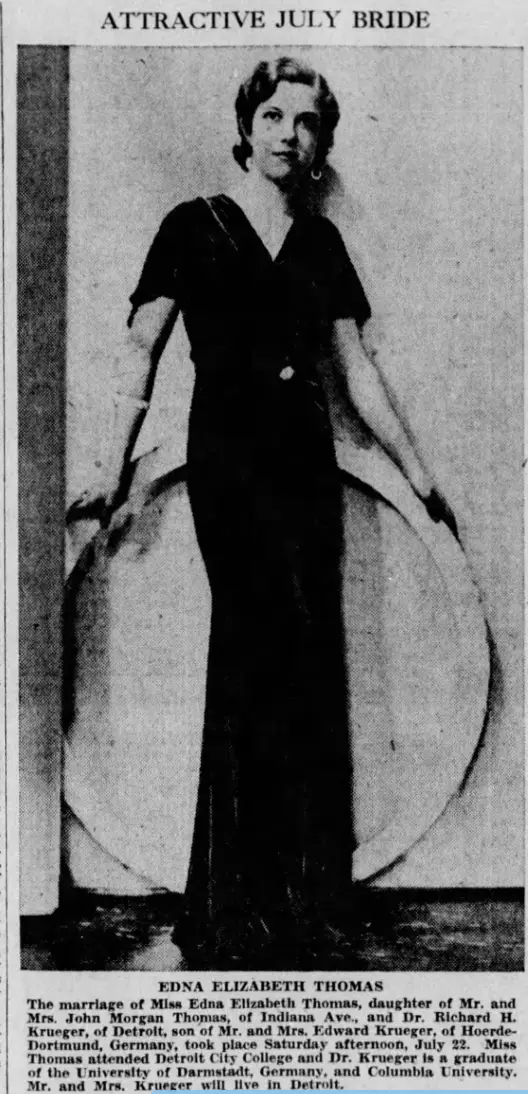
Edna Krueger – Paul Krueger’s mother – Wedding Announcement in 1933
Krueger’s mother, Edna Elizabeth Krueger, visited Texas frequently from California. She divorced Krueger’s father, Dr. Richard Krueger, at the end of 1966. He had attended the early trial proceedings but died in 1970. Keep him in mind. Krueger would later reveal something important about his father.
At some point, Edna crossed paths with the most powerful man in the Texas prison system at the time: Executive Director W. J. “Jim” Estelle Jr.
Estelle, known for modernizing Texas prisons and later negotiating the 1974 Huntsville Siege, was deeply impressed by Edna. In fact, he later stated Krueger’s case was the first time in his career he had ever intervened personally with the parole board on behalf of an inmate.
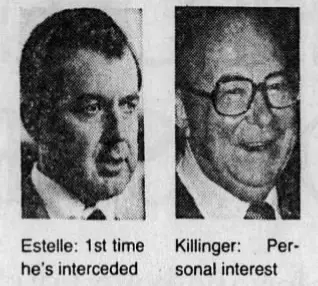 Estelle introduced Edna to Dr. George Killinger, a parole board member who quickly became another advocate. Killinger described Edna as “fascinating” and “heartbroken”, calling her Krueger’s “best opportunity for success.”
Edna had polish. She’d been an interior decorator and had worked as a consultant for the Miss California and Miss USA pageants. She knew how to speak, listen, and persuade.
Whether she was genuinely charismatic—or simply mesmerizing—is open to interpretation. But her influence was undeniable.
Paroled
From 1973 to 1976, Krueger was denied parole.
In 1977, the parole board approved his release—but Governor Dolph Briscoe vetoed it.
In 1978, Killinger urged other board members to meet Edna. One member, Connie Jackson, changed her vote after visiting Krueger in prison.
That December, Estelle met privately with Governor Briscoe. Briscoe agreed—on conditions: Krueger would be paroled for life, required to check in annually, forbidden to return to Texas, and prohibited from contacting anyone in the state without prior approval.
In January 1979, Krueger was driven to the airport and placed on a flight to California.
Here’s where things went wrong.
Prison officials were required to notify counties where crimes occurred so victims could be informed. Krueger’s file clearly noted that Kleberg and Nueces Counties were to be contacted.
Instead, the notice went to Dallas County.
Dallas assumed the proper counties had been notified.
They had not.
The widows learned too late that Paul Krueger was out.
The Twist
Nothing more was heard from Paul Krueger until 2003.
By then, parole laws had changed. Texas was now required to notify other states when parolees moved into their jurisdiction. A letter went out to Pennsylvania.
Authorities there located Krueger.
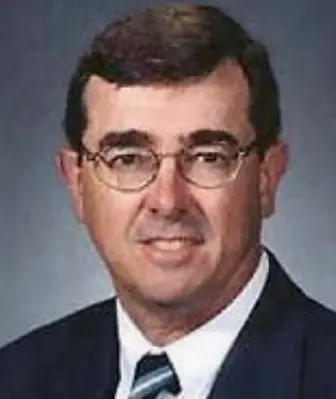 He was a professor at Penn State University.
For fifteen years, he had worked in academia. After his release, Krueger earned two doctorates. He was known as Dr. Paul Krueger—well-liked, respected, and admired by students.
When the news broke, Penn State terminated him immediately. A California university rescinded a job offer.
No colleague or student had a bad word to say about him.
But the question remained: Would you want him teaching your child?
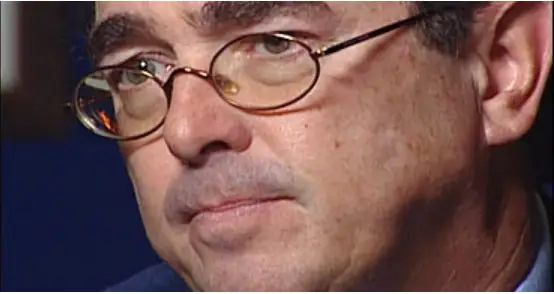
2004 Photo of Paul Krueger – 60 Minutes, September 28, 2004
“I’m not the person I was.”
In a 2004 interview, Krueger spoke publicly. (Unfortunately, I could not locate the video.)
He said he ran away in 1965 to escape an abusive father.
“I was 17. I thought I was old enough to go off on my own.”
He described the killings as a “military operation”—a phrase burned into his memory.
“You had two very disturbed kids looking for something to hang their hats on.”
“I’ve lived with it forever.”
He insisted he could never commit such violence again.
“I’m not the person of 40 years ago.”After prison, Krueger married, had a son, and rebuilt his life.
When asked if Penn State ever questioned his past:
“They didn’t ask—and I didn’t tell.”
That revelation changed hiring practices nationwide. Background checks became standard.
I can’t find a scrap of anything about Paul Eric Krueger after 2004.
I truly feel bad for him. i believe he is reformed, but would I stake my children’s lives on it? Doubtful.
So, would you feel comfortable working with him? Would you want him to teach where your children attend college?
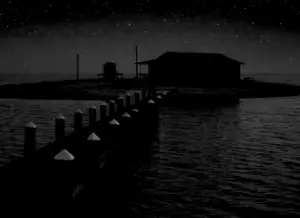
It is hard to forget three fishermen out for a quiet evening on a narrow pier, quiet voices telling each other lies, opening beers with a church key, and the whir of a well-oiled reels wound with new line … silhouettes against lantern light,
Let me know what you think in the comments—Facebook, YouTube, or my blog. Every like and comment helps keep my pages alive out here in the true-crime ghost town where I go hunting for stories.
And if any of you remember this crime, please tell me. Again, I regret there are no known photographs of the victims and very little follow-up coverage. I wish we knew more about the men who lost their lives.